
UPCOMING
Events
Join us for in-depth studies to support your practice for inspiration, healing, and well-being!
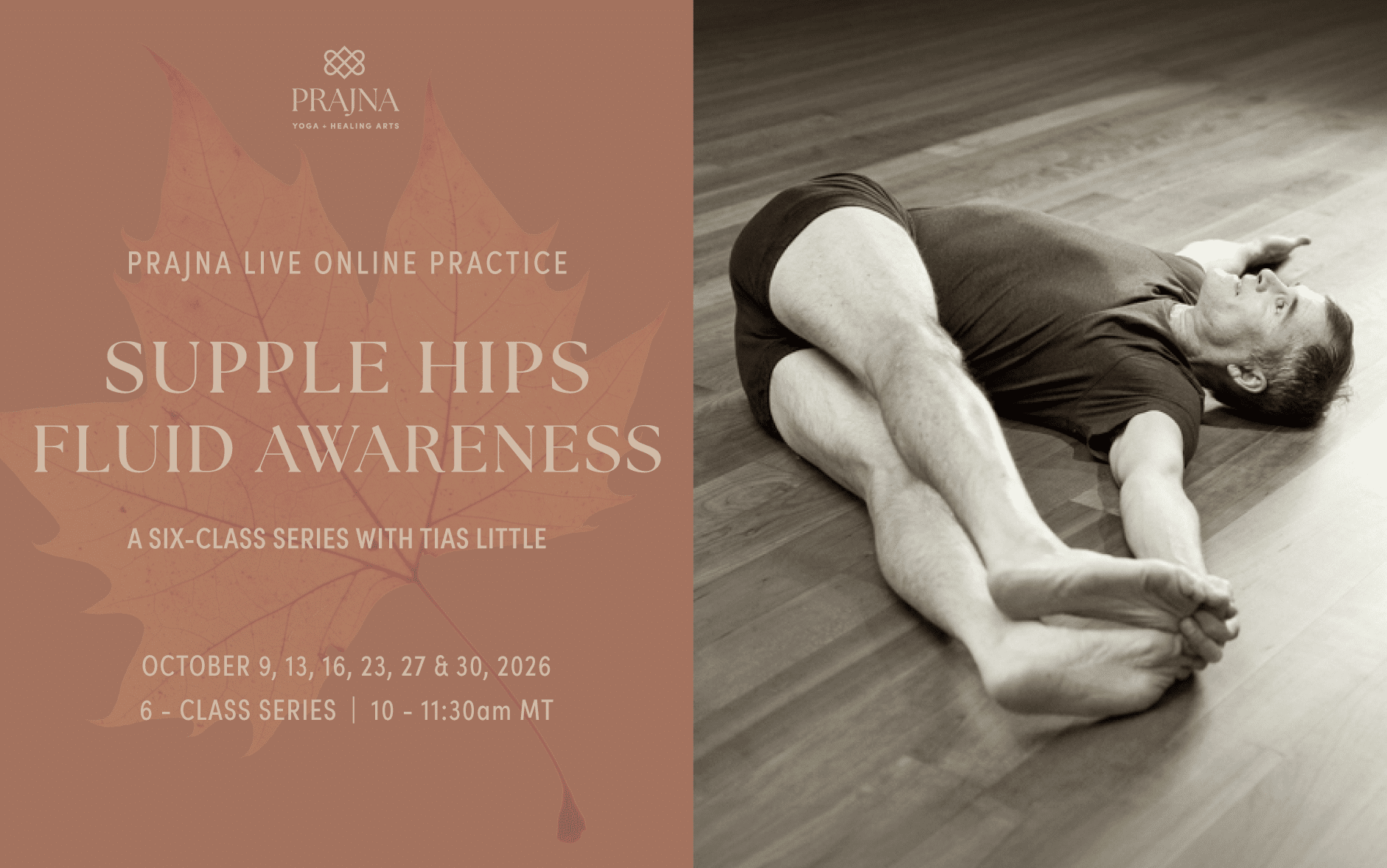
october 2026
Supple Hips, Fluid Awareness | October 6-Class Online Series
This month we devote our practice to slowly and carefully opening the hip joints. Each class begins close to the ground, releasing tension and restriction before progressing to seated and standing poses that bring mobility and stability to the hips, knees and sacrum. Through circling, spiraling, rocking and flowing movements, we cultivate greater ease, fluidity and awareness throughout the pelvis and spine.
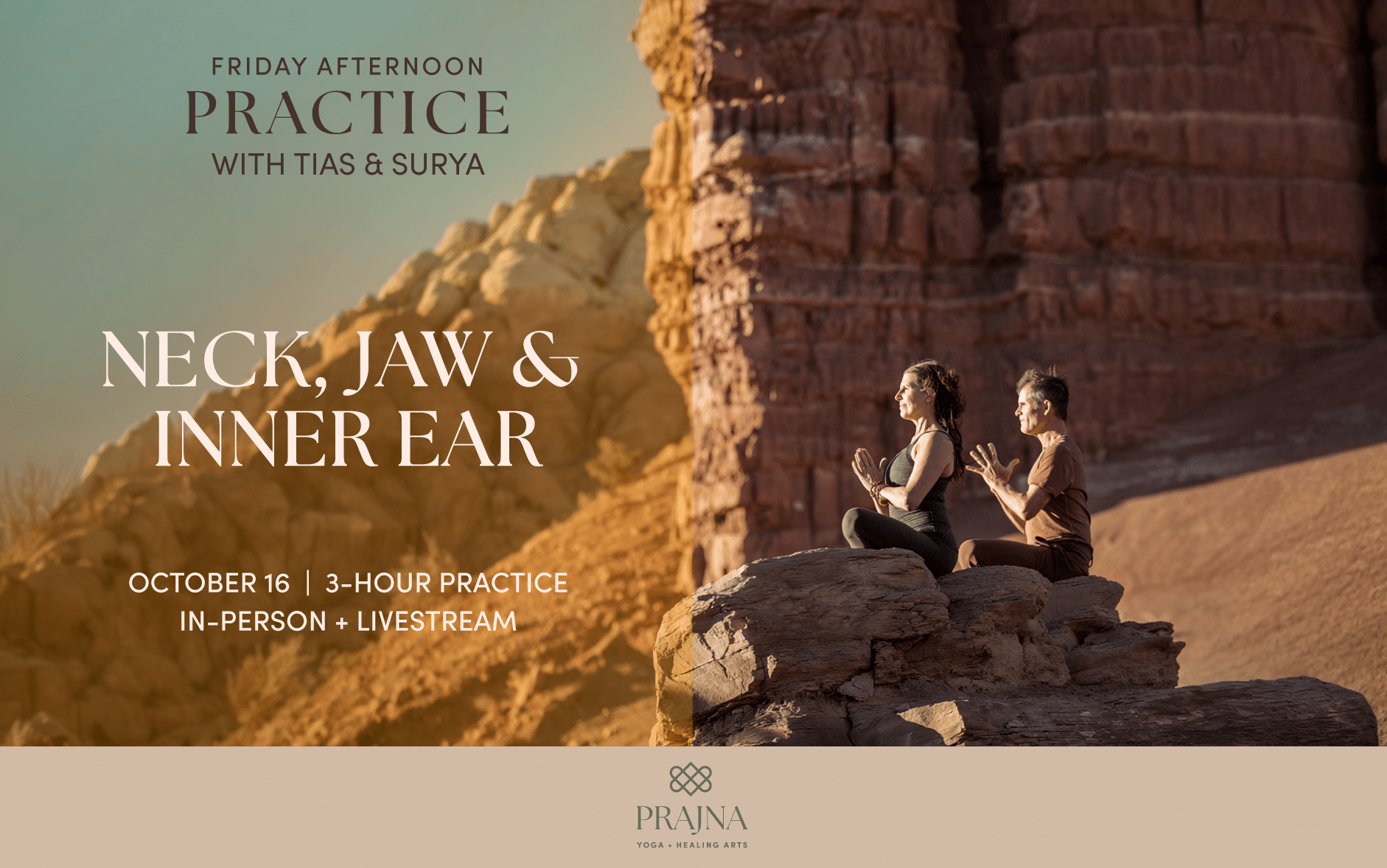
october 16, 2026
Afternoons with Tias & Surya | Practice for the Neck, Jaw and Inner Ear
The structures within the throat chakra are delicate and fine. When training for meditation, it is essential to release tension around the sensory organs of the eyes, ears and tongue. In this class, we practice somatic movements and asana to release strain in the upper shoulders and neck before balancing the bones and soft tissues of the skull. In pranayama practice, we activate the “bumble bee breath” to bring space and stillness to the inner ear.
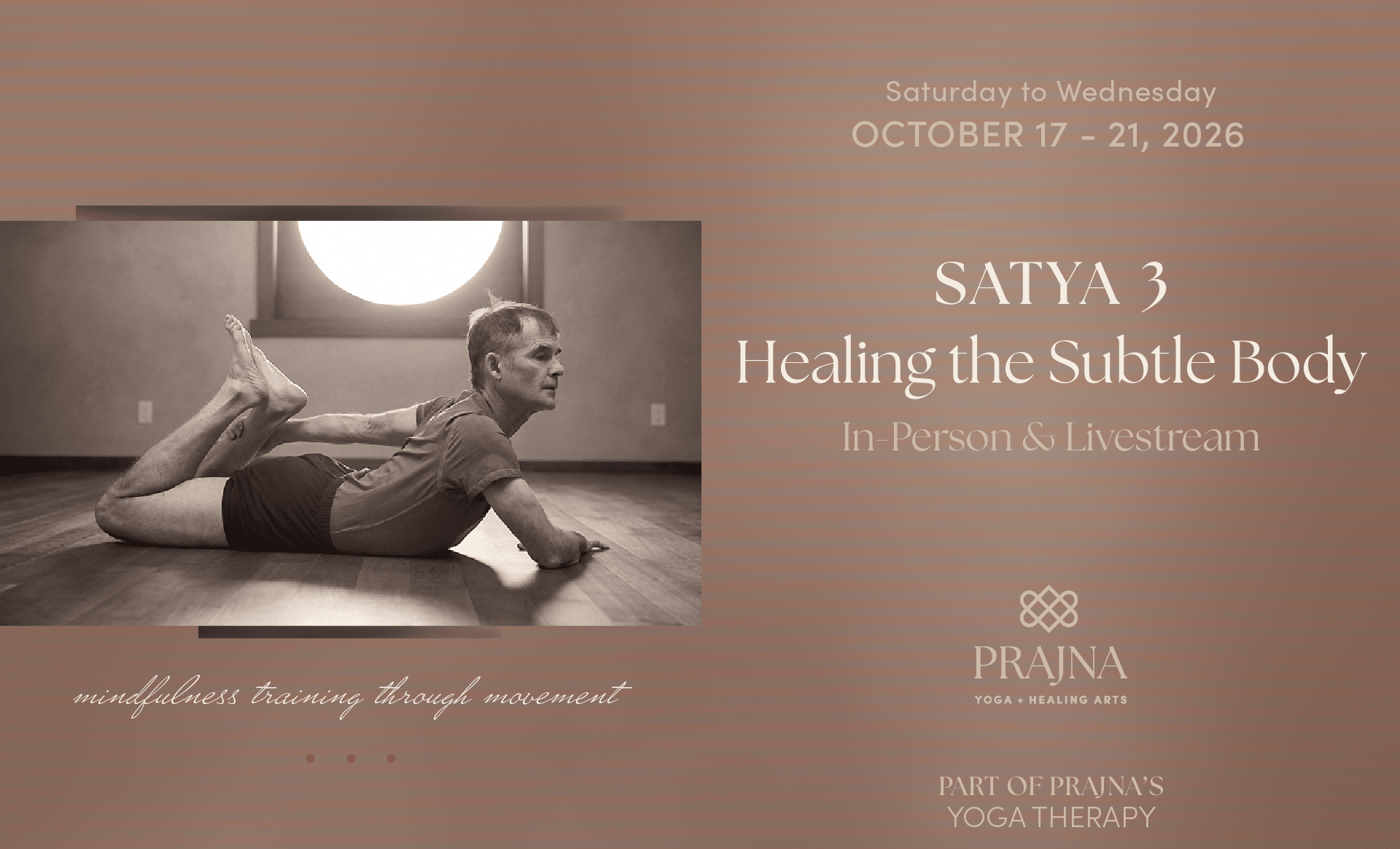
OCTOBER 17 – 21, 2026
SATYA 3 | Healing the Subtle Body | In-Person & Livestream Online Immersion
SATYA 3 investigates the therapeutic benefits of SATYA on the nervous system, endocrine system, digestion, and circulation in order to heal the subtle body. We specifically review SATYA’s effects on the autonomic nervous system and how SATYA can heal trauma in the body. Much focus is given to working with the neck, cranium, eyes, and inner ear. Students will learn how to utilize SATYA therapeutically with individual clients.
At the conclusion of SATYA 3, students who wish to complete the SATYA Certification design and fulfill a final practicum, using SATYA as a therapeutic modality.
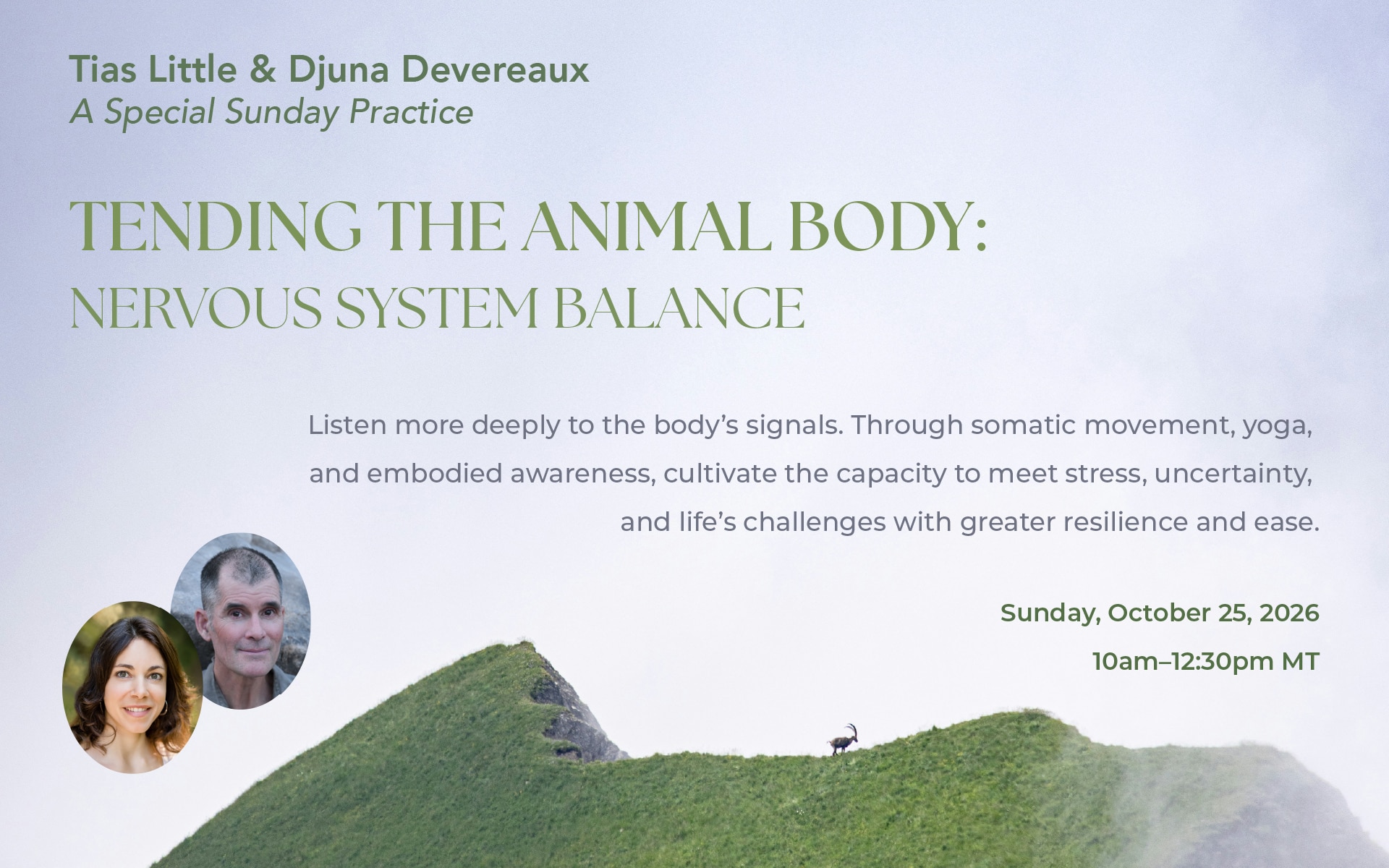
october 25, 2026
Tending the Animal Body: Nervous System Balance | with Tias Little and Djuna Devereaux
As we navigate the challenges of our personal and collective lives, our nervous systems activate innate animal survival responses — fight, flight, fawn, and freeze. These responses are designed to engage in the presence of danger and stress and release once it has passed. In our modern world, though, these cycles often go uncompleted, so the perception of threat can become constant and pervasive.
november 11 – december 3, 2026
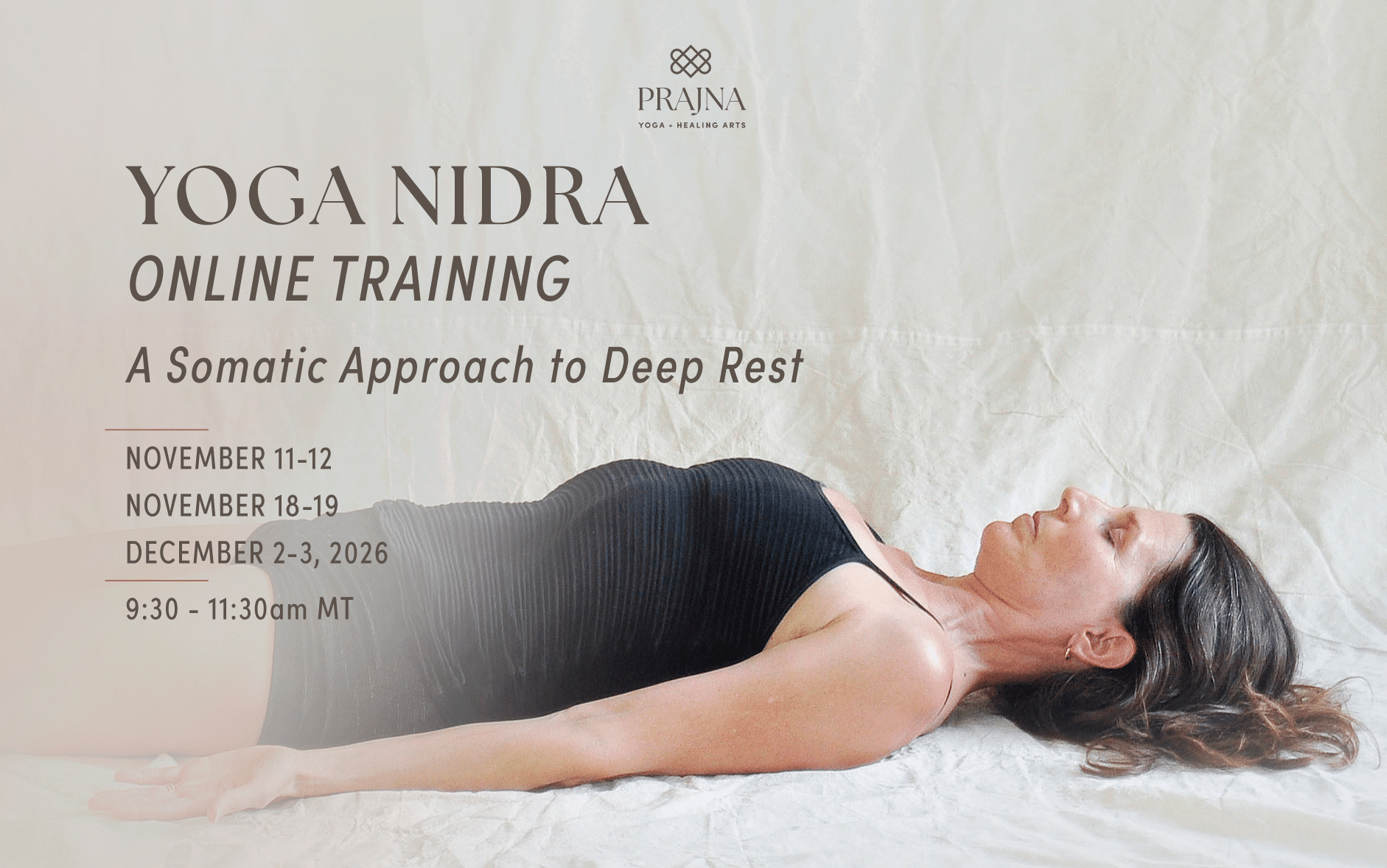
Yoga Nidra: A Somatic Approach to Deep Rest | Online Training
In today’s fast-paced world, deep rest has become one of our greatest medicines. While sleep restores the body naturally, Yoga Nidra offers a conscious pathway into profound restoration, quieting the nervous system while awakening deeper levels of awareness.
november 13, 2026
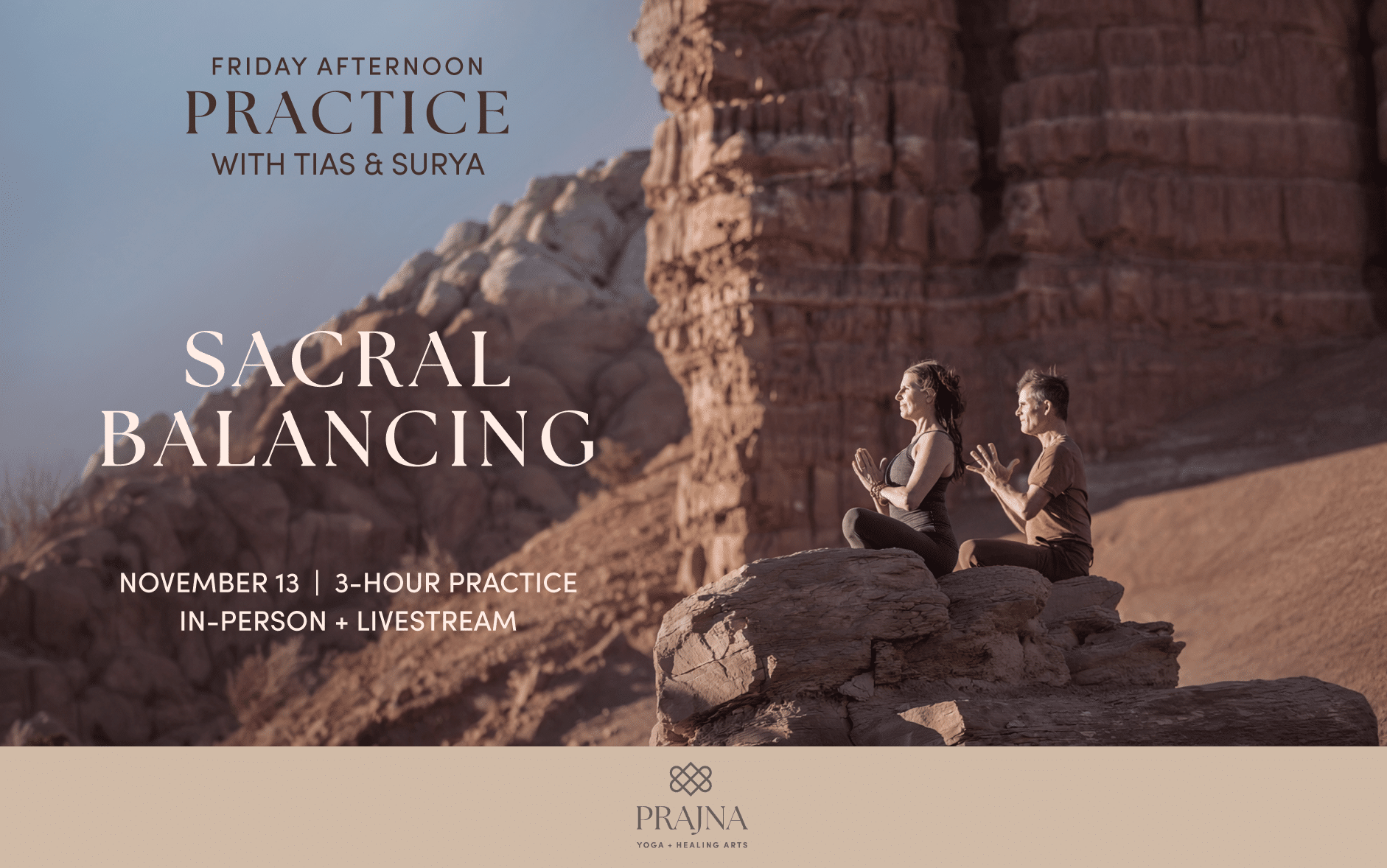
Afternoons with Tias & Surya | Sacral Balancing
The sacrum is known as the “keystone” of the pelvis and it is the central bone to align the spine. In this class, we practice somatic movements to stretch and balance the musculature that attaches directly to the sacrum. Come prepared to do hip openers, twists, and balancing poses to stabilize your sacrum and pelvis.
NOvember 21, 2026
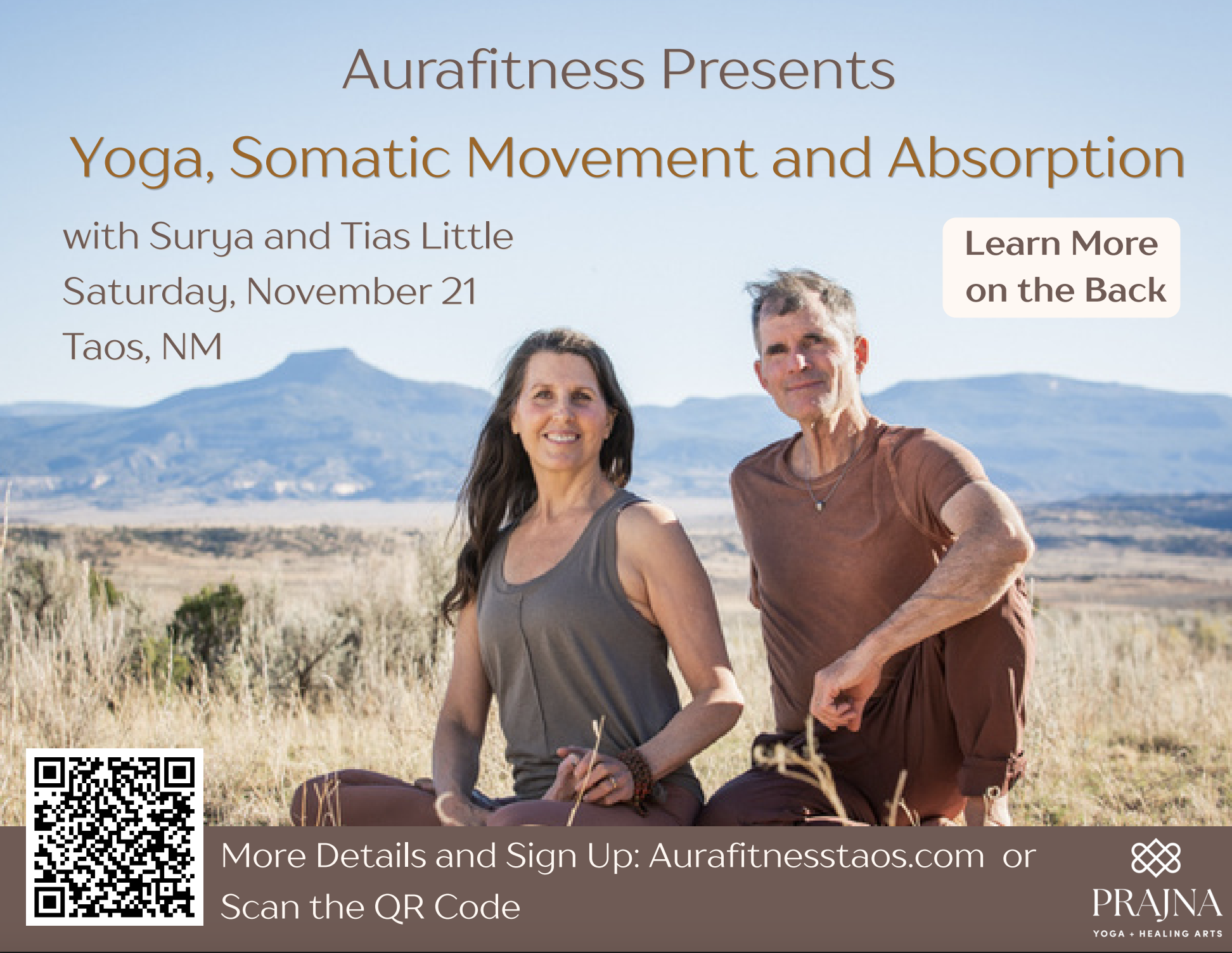
Yoga, Somatic Movement and Absorption
1-day workshop hosted by Aurafitness
In this series of classes, we replenish the body by stretching the fascia and soaking the tissues. Through somatic movement, meditation and yoga postures we open the pathways of prana to drop into spaces of vast and clear awareness.
december 4 – 6, 2026
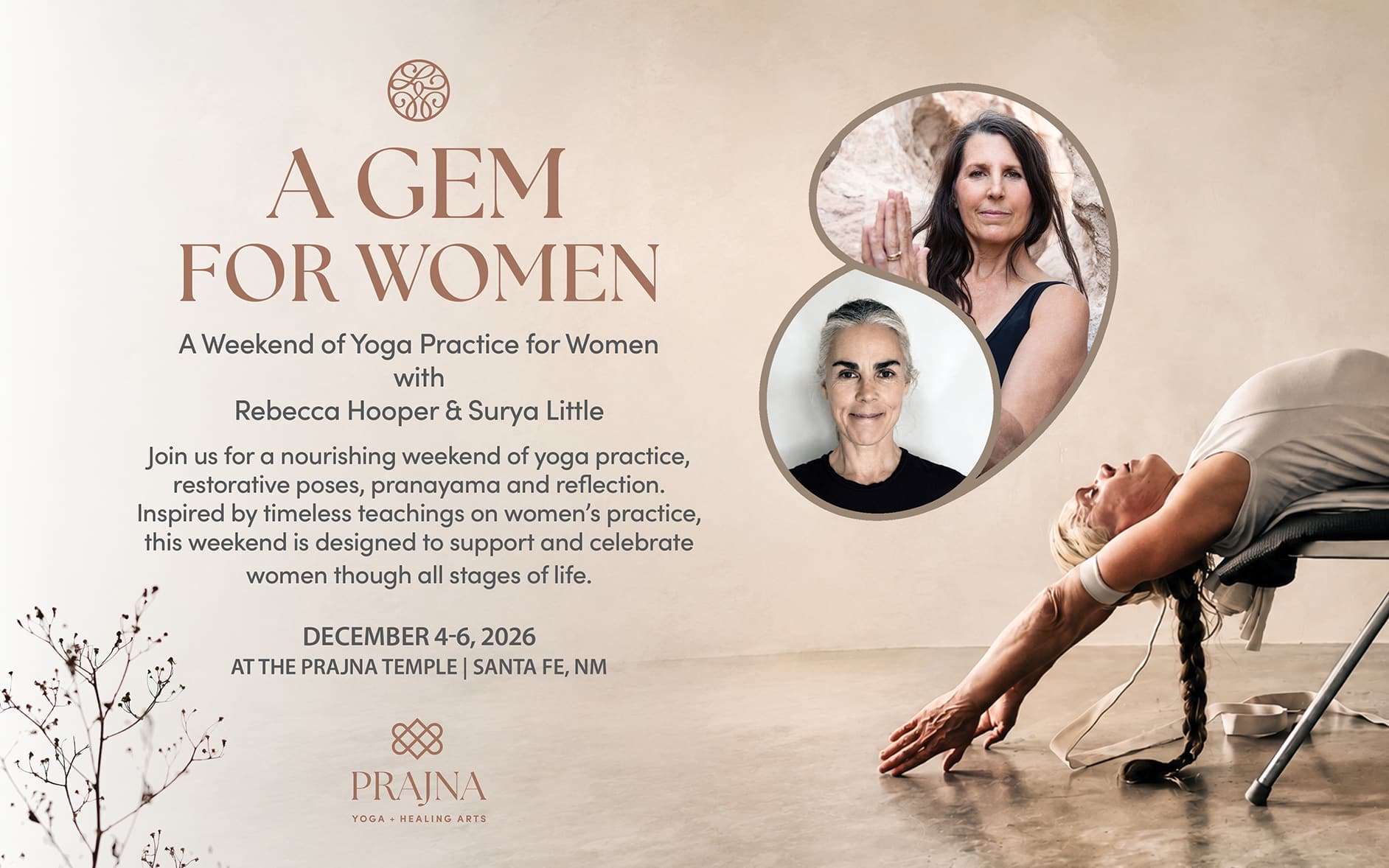
A GEM FOR WOMEN: A Weekend of Yoga Practice for Women with Rebecca Hooper & Surya Little
Over the course of the weekend, Rebecca and Surya will guide practices that include asana, restorative practice, pranayama, mudra, and meditation. Particular attention will be given to adapting the practice to meet women’s changing needs, while cultivating greater balance, awareness, and ease.
DECember 11, 2026
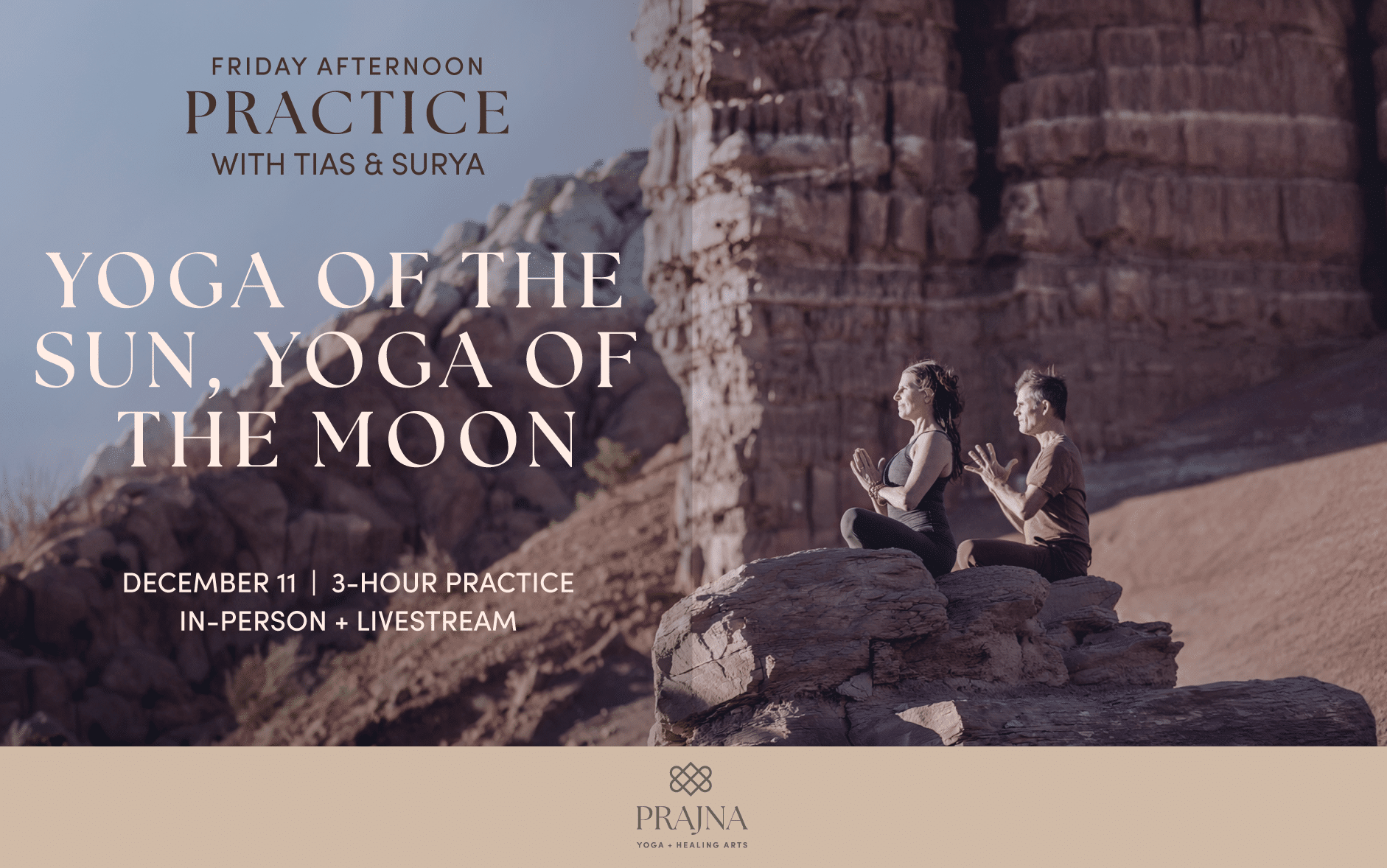
Afternoons with Tias & Surya | Yoga of the Sun, Yoga of the Moon
Yoga is described historically as the union of opposites and in this class we investigate the polarity between solar and lunar energies in the body, two opposing and complementary sources of light and gravitational pull. In practice we balance the two sides of the body— the right leg and left leg, right arm and left arm, right nostril and left nostril, and the right brain hemisphere and left brain hemisphere in order to animate and illuminate the central channel of the spine. Come prepared to practice postures, mudras, chanting, and meditation to create a harmonic convergence within the subtle energy fields of the body.
april 10 – 14, 2027
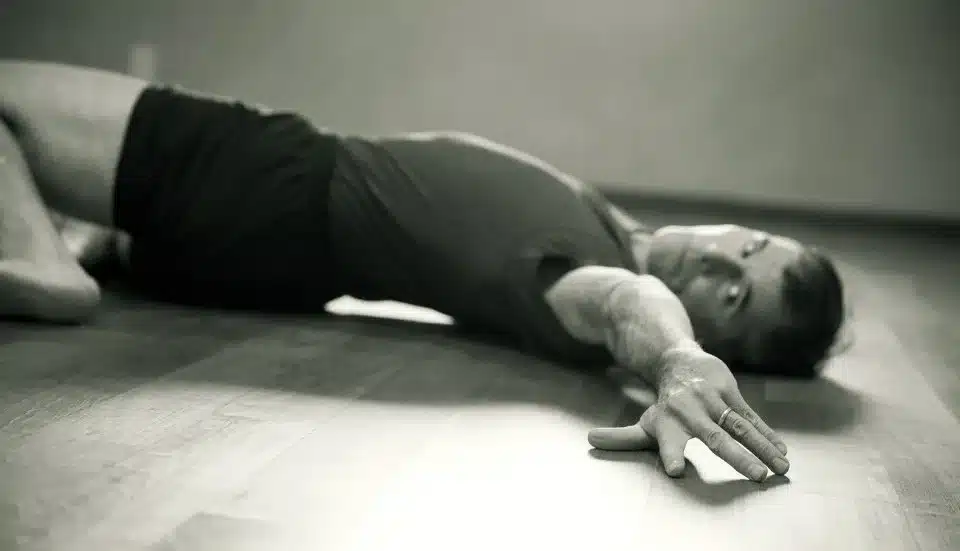
SATYA 1 | Opening the Fascia | In-Person & Livestream Online Immersion
In a totally unique way, the SATYA practice opens doorways into the interior, providing new pathways of perception and feeling. It guides students away from “doing” movement and toward sensing, receiving and “being” movement. As an adjunct to yoga practice, somatic awareness leads to embodied wisdom.
SATYA is Prajna Yoga’s “yin” style practice. All the movements are done on the floor in a flowing fashion, without force. The SATYA movements cultivate inner listening and heighten proprioceptive awareness. This awareness is the body’s innate intelligence. By increasing our capacity for sensory awareness, we become more sentient, wakeful beings in the world. The exercises are non-weight bearing and involve sliding, gliding and circular movements to reduce myo-fascial holding in the body.
The SATYA training, along with yoga postures, involves neural-muscular re-education. Like in vinyasa training, breath is combined with movement in order to deepen the respiratory rhythm. All movements support profound physical rest of the body and prepare for savasana and yoga nidra (the yogic sleep).
may 15 – 17, 2027
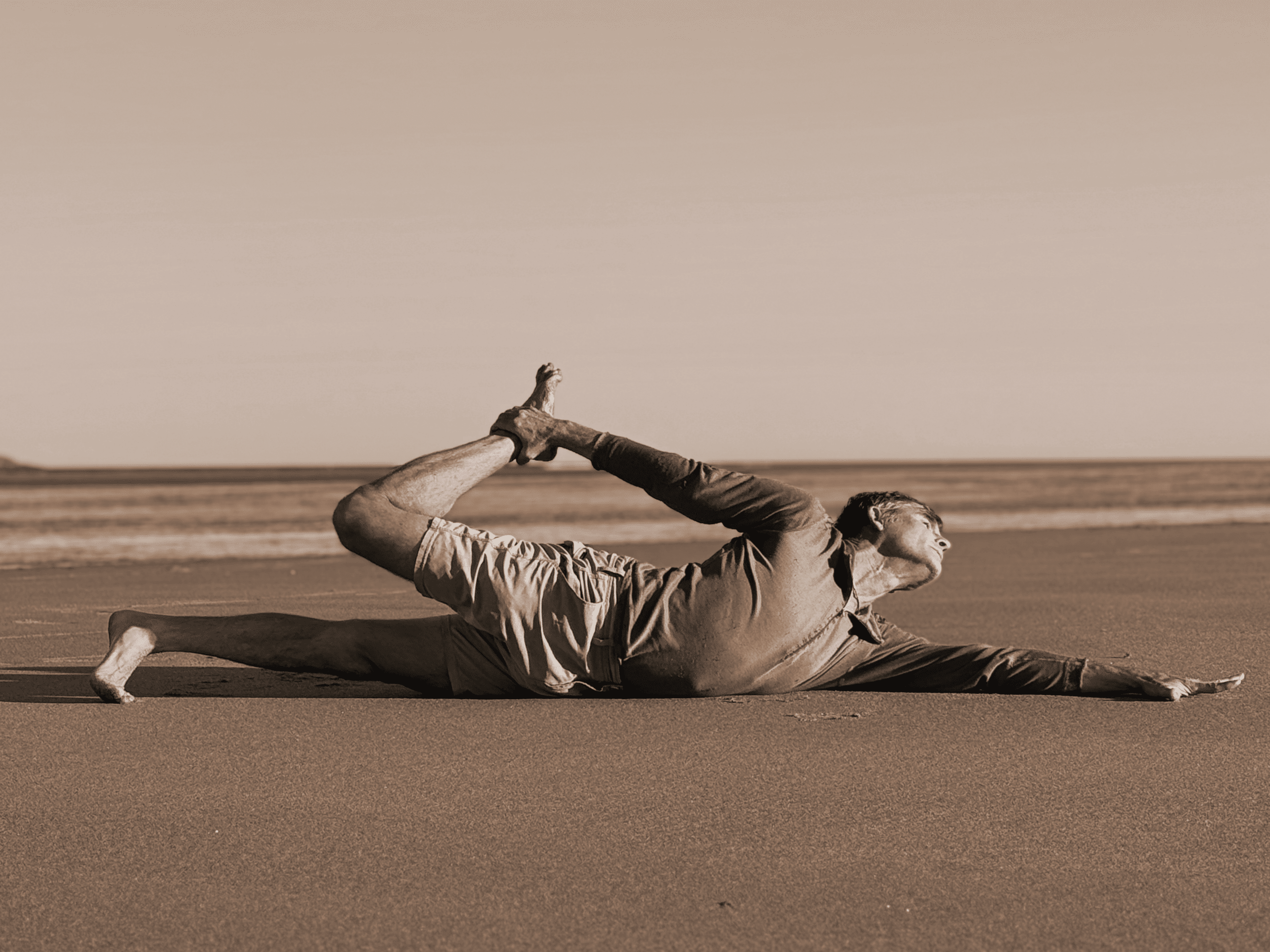
Yoga, Somatics and the Body of Delight: a week-end with Tias & Surya Little | hosted by Spirit Yoga, Berlin, Germany
In yoga, the nadis are described as rivers of energy flowing through the body—pathways of circulation that include blood, lymph, and the nervous system moving through the connective tissues. In SATYA somatics, we learn to listen to these pathways through small, refined movements—rocking, spiraling, gliding, unwinding—until the body remembers how to release.
june 19 – 23, 2027
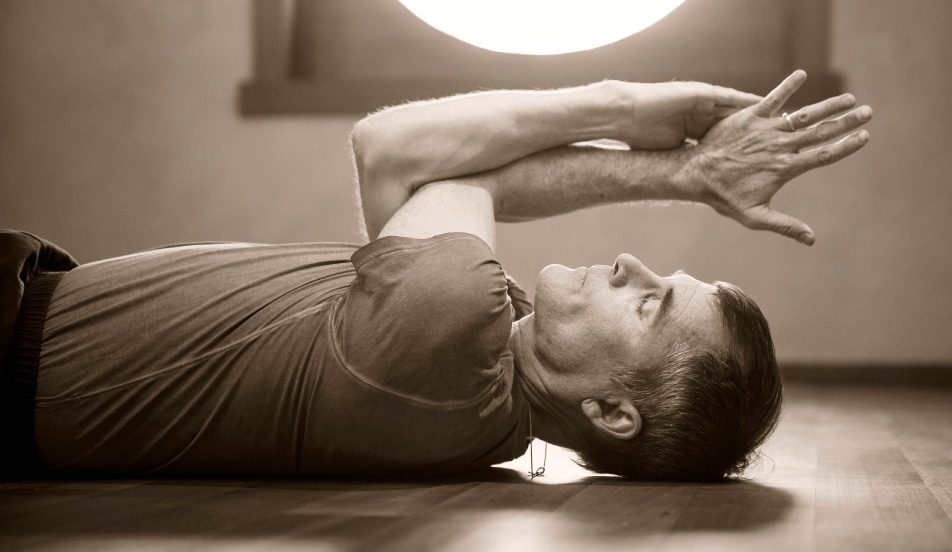
SATYA 2 | Pumping the Prana | In-Person & Livestream Online Immersion
Once you have felt the power of SATYA you will want to continue to soak in further. In SATYA 2, you will learn more complex sequencing, more nuanced variations of movement, and more about the physiological benefits. For those wishing to integrate SATYA into their teaching, SATYA 2 and 3 are a must. In this course, you will learn how to design SATYA sequences and assist movements to facilitate greater myofascial release.
october 16 – 20, 2027
SATYA 3 | Healing the Subtle Body | In-Person & Livestream Online Immersion
SATYA 3 investigates the therapeutic benefits of SATYA on the nervous system, endocrine system, digestion, and circulation in order to heal the subtle body. We specifically review SATYA’s effects on the autonomic nervous system and how SATYA can heal trauma in the body. Much focus is given to working with the neck, cranium, eyes, and inner ear. Students will learn how to utilize SATYA therapeutically with individual clients.
At the conclusion of SATYA 3, students who wish to complete the SATYA Certification design and fulfill a final practicum, using SATYA as a therapeutic modality.
